
How to Create a Winning Sales Funnel
Imagine pouring your entire marketing budget into driving traffic to your website, only to watch those visitors leave without buying a single thing. You have a great product, a beautiful website, and a solid brand message. Yet, the numbers simply do not add up. If this sounds familiar, your business is likely missing a crucial component: a well-structured sales funnel.
A sales funnel acts as a guided path that leads potential customers from their very first interaction with your brand all the way to a final purchase. Without it, you are leaving revenue on the table and relying on pure luck to generate sales. Building a structured journey ensures you capture attention, build trust, and seamlessly guide prospects toward a buying decision.
This guide will show you exactly how to build a highly effective sales system from the ground up. We will break down the four core stages of a funnel, explain how to establish a foundation of trust, and provide a step-by-step blueprint for implementation. By the end of this post, you will know how to turn casual browsers into loyal, paying customers.
What Exactly is a Sales Funnel?
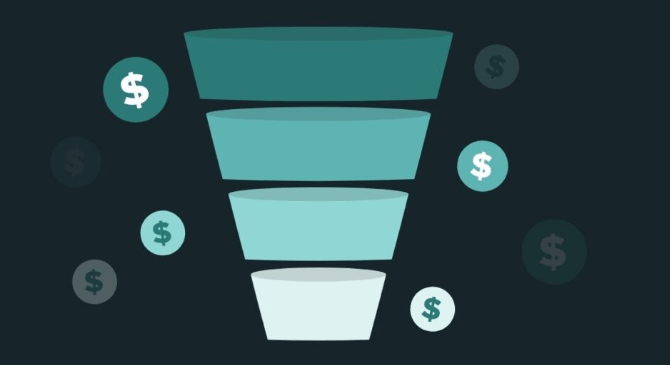
A sales funnel represents the visual journey a customer takes as they move toward buying your product or service. The concept uses a funnel shape to illustrate how a large number of people start at the top, but only a fraction make it to the bottom to become buyers. At the widest part of the funnel, you cast a wide net to capture attention.
As prospects move deeper into the funnel, the numbers decrease, but the quality of the leads increases. The people who remain are highly interested in what you have to offer. Your goal as a business owner is to minimize the drop-off rate at each stage and move as many qualified leads to the finish line as possible.
Creating this system requires understanding human psychology and buyer behavior. You cannot expect someone to marry you on the first date, and you cannot expect a cold lead to buy a high-ticket item immediately. A winning sales funnel respects the buyer’s journey and provides the right information at the exact right time.
The Anatomy of a Winning Sales Funnel
Every successful sales system follows a logical progression known as the AIDA model. This stands for Awareness, Interest, Decision, and Action. Let us explore each stage in detail so you understand how to move prospects through your pipeline.
Stage 1: Awareness (Top of the Funnel)
The awareness stage is where people discover your business for the first time. They might find you through a Google search, a social media advertisement, a referral, or a helpful blog post. At this point, the prospect has a specific problem they want to solve, and they are looking for answers.
Your main objective here is simply to capture their attention and introduce your brand. You are not trying to push a hard sale. Instead, you want to provide immense value and position yourself as an authority in your industry. Educational content works best at this stage.
Focus on creating engaging social media reels, informative YouTube videos, optimized blog articles, and compelling podcasts. The goal is to make the prospect think, “This company understands my problem.” Once you have their attention, you can invite them to move to the next step.
Stage 2: Interest (Middle of the Funnel)
Now that you have captured their attention, you need to hold it. During the interest stage, prospects are actively researching their problem and evaluating different solutions. They are comparing your brand to your competitors and deciding if you are worth their time and money.
Here, you need to transition from broad educational content to more targeted, specific information. You want to capture their contact information so you can communicate with them directly. This is where a lead magnet becomes incredibly useful. A lead magnet is a free resource you offer in exchange for an email address.
Great lead magnets include downloadable checklists, comprehensive ebooks, free webinars, or exclusive discount codes. Once the prospect hands over their email, they officially become a lead. You can now begin nurturing this relationship through targeted email marketing campaigns that highlight your expertise.
You Should Also Read : TechAiTech
Stage 3: Decision (Middle to Bottom of the Funnel)
At the decision stage, your prospect is ready to make a purchase. They have narrowed down their options and are trying to decide which company deserves their business. This is where your marketing needs to shift from educational to persuasive. You must prove that your specific solution is the best one available.
To win them over, you need to provide compelling reasons to choose you. This involves showcasing case studies, sharing glowing customer testimonials, and offering product demonstrations. You want to eliminate any lingering doubts they might have about your offer.
Pricing pages, comparison charts, and live webinars work incredibly well here. You might also consider offering a limited-time bonus or a free trial to push them off the fence. The goal is to make your offer so irresistible that saying no feels like a missed opportunity.
Stage 4: Action (Bottom of the Funnel)
The action stage is the final destination. The prospect has decided to buy, and they are ready to hand over their credit card information. However, your job is not entirely done yet. A complicated checkout process can still ruin the sale at the very last second.
You must make the purchasing process as frictionless as possible. Ensure your checkout page loads quickly, requires minimal form fields, and clearly displays trust badges. Offer multiple payment options to accommodate different preferences.
Once the transaction is complete, celebrate the new customer. Send a warm welcome email, provide clear instructions on how to access their purchase, and offer exceptional customer support. A smooth onboarding experience reduces buyer’s remorse and sets the stage for future purchases and referrals.
Building Trust to Drive Conversions
Even the most perfectly designed sales funnel will fail if your audience does not trust you. Trust is the ultimate currency in business. If prospects doubt your credibility, they will exit your funnel and buy from a competitor. Building trust requires a combination of professionalism, transparency, and proof.
Establishing a Professional Foundation
First impressions matter immensely when building a brand. When a prospect researches your company, they look for signs of legitimacy. If your contact page lists a residential apartment or a generic post office box, it immediately raises a red flag. Potential buyers might assume your business is a fly-by-night operation rather than a credible enterprise.
This is why securing a registered business address is a critical step in building a trustworthy foundation. A real commercial address in a respected district signals stability and professionalism to your audience. It shows that you operate a legitimate company capable of handling their needs securely.
Furthermore, a proper address helps with legal compliance and protects your personal privacy. When your business infrastructure looks professional, prospects feel much more comfortable entering their payment details on your website.
Leveraging Social Proof and Guarantees
Beyond a professional appearance, you need social proof to validate your claims. People look to others when making decisions. If they see that hundreds of other people have successfully used your product, their perceived risk drops significantly.
Display customer reviews prominently on your landing pages and checkout screens. Use video testimonials whenever possible, as they feel more authentic than written text. Highlight specific results your clients have achieved to prove your product actually works.
Additionally, offer a strong money-back guarantee. A guarantee reverses the risk from the buyer to the seller. When you confidently stand behind your product, you remove the fear of making a bad investment, which drastically increases conversion rates.
Step-by-Step Guide to Building Your Funnel
Now that you understand the theory behind a winning sales funnel, it is time to put it into practice. Follow these practical steps to construct a system that predictably turns strangers into paying customers.
Understand Your Target Audience
You cannot create a compelling journey if you do not know who you are guiding. Start by developing detailed buyer personas. You need to understand your ideal customer’s pain points, desires, objections, and buying habits.
Conduct surveys with your existing customers to find out why they chose you. Spend time reading forums, social media comments, and reviews in your industry. When you speak directly to your audience’s specific problems, your marketing message becomes significantly more powerful.
Create an Irresistible Lead Magnet
Your lead magnet is the bridge between the awareness and interest stages. It must be highly relevant to your core offer and provide an immediate solution to a specific problem. Do not create a generic 50-page ebook that nobody will actually read.
Instead, focus on quick wins. A one-page cheat sheet, a custom calculator, or a high-value video training often performs best. The goal is to deliver so much value for free that the prospect naturally assumes your paid products must be incredible.
Design a High-Converting Landing Page
Your landing page has one job: convince the visitor to opt into your lead magnet. Remove all distractions from this page. Hide the main website navigation menu and avoid adding external links that might lead the prospect away.
Craft a bold, clear headline that communicates the specific benefit of your offer. Use bullet points to highlight what they will learn or receive. Finally, include a highly visible call-to-action (CTA) button that tells them exactly what to do next, such as “Download Your Free Guide Now.”
Nurture Leads with an Email Sequence
Once a prospect joins your email list, you must nurture the relationship. Do not immediately bombard them with sales pitches. Instead, set up an automated email sequence that delivers value over a few days or weeks.
Start by delivering the promised lead magnet in the first email. In the following emails, share a relevant personal story, provide actionable tips, and highlight a customer case study. Finally, smoothly transition into presenting your core offer and explaining how it solves their primary problem.
Tracking and Optimizing Your Funnel
A sales funnel is not a “set it and forget it” project. Consumer behavior shifts, and ad platforms change their algorithms regularly. To maintain a high conversion rate, you must continuously track your data and optimize your system.
Identify your key performance indicators (KPIs) for each stage of the funnel. Track metrics like landing page conversion rates, email open rates, click-through rates, and overall return on ad spend (ROAS). When you look at the data, you will easily spot where people are dropping off.
Use A/B testing to improve underperforming areas. Test different headlines on your landing page to see which one converts better. Experiment with different email subject lines or change the color of your checkout buttons. Small, incremental improvements compound over time, resulting in massive revenue growth.
Frequently Asked Questions (FAQs)
How long does it take to build a sales funnel?
The initial setup can take anywhere from a few days to a few weeks, depending on the complexity of your offer. Writing the copy, recording videos, and setting up the technical automations require focused effort. However, optimizing the funnel is an ongoing process that lasts as long as your business operates.
Do I need expensive software to create a funnel?
No, you do not need to spend thousands of dollars on enterprise software. Many affordable tools allow you to build landing pages, host lead magnets, and send automated emails. As your business grows and your funnel generates revenue, you can upgrade to more advanced platforms with robust features.
Why is my landing page not converting visitors into leads?
Low conversion rates usually stem from a disconnect between your ad copy and your landing page. Ensure the promise you make in your advertisement matches the headline on your landing page exactly. Additionally, check that your lead magnet solves a painful, urgent problem for your specific target audience.
How many emails should I include in my nurture sequence?
A standard welcome and nurture sequence typically includes five to seven emails sent over the course of a week or two. This provides enough time to build trust and demonstrate authority without overwhelming the subscriber’s inbox. Pay attention to your unsubscribe rates and adjust the frequency if necessary.
Can a service-based business use a sales funnel?
Absolutely. Sales funnels work incredibly well for service providers, consultants, and agencies. Instead of driving prospects to a traditional product checkout page, a service funnel typically guides leads toward booking a discovery call or a free consultation.
Conclusion
Creating a winning sales funnel transforms your business from a chaotic hustle into a predictable revenue machine. By understanding the buyer’s journey, you can deliver the exact message your prospects need at the exact moment they need it.
Start by mapping out your four stages: Awareness, Interest, Decision, and Action. Focus heavily on building a professional foundation and leveraging social proof to eliminate trust barriers. Build your first simple funnel by creating a targeted lead magnet, setting up a clean landing page, and writing a valuable email sequence. Launch your system, track your numbers closely, and never stop optimizing for better results.